x(u,v) = α (1-v/(2π)) cos(n v) (1 +
cos(u)) + γ cos(n v)
y(u,v) = α (1-v/(2π)) sin(n v) (1 + cos(u)) + γ sin(n
v)
z(u,v) = α (1-v/(2π)) sin(u) + β v/(2π)
where:
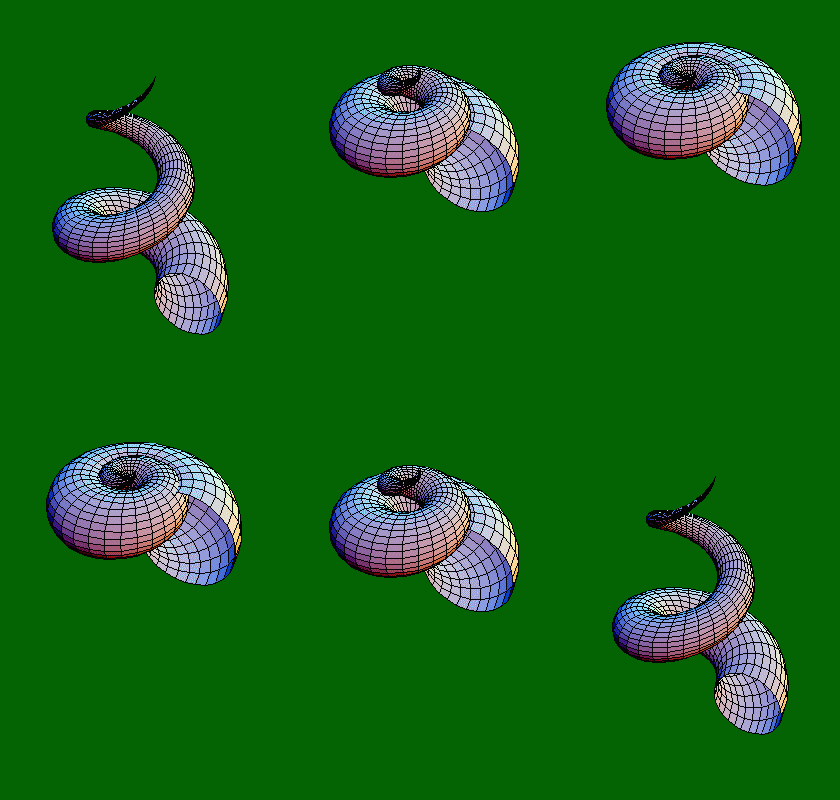
- α is a parameter ranging from 0.15 (horn) to 1 (snail) and back, with a step of 0.05, giving the 35 frames shown here
- β is a parameter with the fixed value 1 for this plot
- γ is a parameter with the fixed value 0.1 for this plot, determining the thickness of the horn-snail
- n is a parameter with the fixed value 2 for this plot, determining the number of twists around the z-axis
- u ranges from 0 to 2π, scanning the angle of each circular section of the surface
- v ranges from 0 to 2π, defining the diameter of the "cylinder" within which the surface lies.
References:
Tore Nordstrand, Mathematical Surfaces. (Note: Nordstrand calls this a "seashell")