About Macedonia


About Macedonia |
|
|
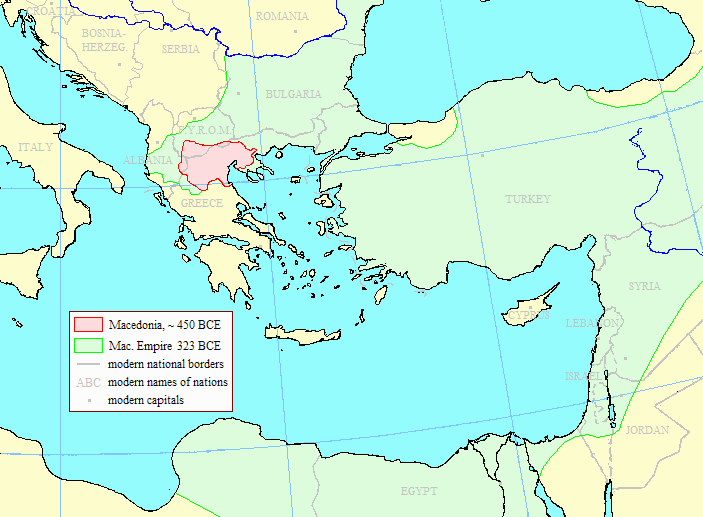
The term “Macedonia” refers to a geographical region in the south-eastern part of Europe, in the Balkans. Its southern region is part of Greece, its north-eastern region is part of Bulgaria (or “Pirin” as many Bulgarians prefer to call it), and its north-western region is the country that insists to call itself simply “Macedonia”, as if it represents the entire geographical region (or as if it aspires to “conquer” it one day, to speak in pre-21st century terms); that’s the nation that also appears as F.Y.R.O.M. (Former Yugoslav Republic of Macedonia) in the United Nations, and it is to its nationals that the author of this page addresses an open letter, a bit further down in this page. The geographical region of Macedonia exists since antiquity, but the people who inhabit it arrived in it at different times. The Greeks and Albanians have lived in the region for as long as there are historical records; the Slavs, Turks, and other people, arrived later (in the AD times). Since many people love to claim ancient Macedonia for themselves, I prepared the following map, which shows the kingdom of ancient Macedonia superimposed over modern borders of nations. Ancient Macedonia is shown in two periods: at the time of Classic Greece (~450 BCE, pink color), and at the time of Alexander’s death (323 BCE, green color). In the latter case, only part of the kingdom is shown (it extended as far to the east as modern western India) . No manual processing was performed to produce the above map (save for the legend and the names of nations). A map of Europe was used as the original source, colors and other features were removed through image processing, and the two borders of Macedonia during the given periods were extracted from maps available on the web (this one and this one) and superimposed on the original. |
An Open Letter to My Northern NeighborsDear nationals who insist to call yourselves — and only yourselves — “Macedonians”: Why do you deny this right from me? I am a Macedonian. At least, that’s what I want to call myself. I was born in Greek Macedonia, specifically in the city of Edessa, and so I identify myself as follows: an Edessian, a Macedonian, a Greek, a Balkan, and a European. Do I have this right? Do you grant me this right? Aren’t you the champions of the idea that people must have the right to determine by themselves what they want to be called? Yes, right? Then why do you deny that I, too, am a Macedonian? Some of you (alas, a few only) might claim that, no, you don’t deny this right from me. But you do! Otherwise why do you want to call your country simply the “Republic of Macedonia”? Why do you deny placing a geographical qualification in front of the name of your country, such as “Rep. of Upper Macedonia”, or “Rep. of New Macedonia”, or any other term that shows that you are not the only Macedonians? Why do you want to exclude me, usurping my and many of my compatriots’ Macedonian identity? What is it that you want when you refuse to place an epithet in front of your Macedonia, such as Upper, or New, etc.? What is it that you have in your minds? Is it that you want to say that we, Macedonian Greeks, are “wrongly” there, in a place that “really” belongs to you? If not, if you sincerely don’t have aspirations to make the land of another nation your own, then you must accept a geographical epithet in front of the name of your country. Otherwise you are not sincere, but duplicitous. If yes, if you sincerely believe that you are the only, the “true” Macedonians, then please consider the following:
Hello? |
|
In short, “Alexander” means: “Protector of men” — but in Greek only! In your Slavic language it means absolutely nothing, because the word is of Greek, not of Slavic origin. Want some reference for the previous claim? Because “alexandros” was a word in Ancient Greek (not just a name), it has an entry in Liddell & Scott’s dictionary, the most authoritative, the “Mother of all Ancient Greek dictionaries”. Here is the entry for “alexandros” in Liddell & Scott’s. Meaning: “defending men”. |
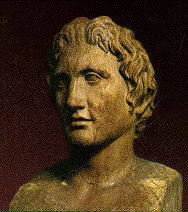 Alexander III |
Hello again? Let’s go on:
“He who loves horses”, that’s what “Philippos” means in Greek. And if you want some reference to substantiate the previous claims, here is the Wikipedia page for the entry “Philip II of Macedon”, which says the same thing. Come on now, explain please the origin of “Филип” in your Slavic language. |
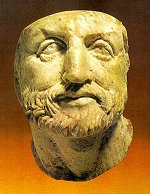 Philip II |
|
|
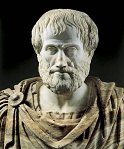 Aristotle |
|
Look, I know what your unhistorical historians claim: that Macedonian was a different language, not Greek, and that Alexander was talking to his men in this different language. But I think it is high time that you grow up and look at the evidence: there is not a single ancient Macedonian scripture unearthed in archeological sites that is not in Greek, or that hints at a language other than Greek. All Macedonian names are Greek, as I already discussed. The people of ancient Macedonia were understanding Attic Greek; we know this because Euripides’s theatrical plays, for instance, were performed in Macedonia, and the public attended those plays, obviously understanding them. (There is no evidence of translations of such works in antiquity.) Last, but not least, Alexander’s conquests spread to Asia and North Africa the Greek language, not some supposedly different Macedonian language, although Alexander’s army was Macedonian. (Do you think the Macedonians helped spread a language foreign to them?) It was because of Alexander that Greek became the lingua franca (the “common language”) of the peoples in the Mediterranean world during the so-called “Hellenistic times” (last three centuries before Christ), and that’s why the New Testament was written in Greek.
Pause for a second and think: what is the language that you speak? Is it a language, or a dialect? Do you know when, according to the theory of linguistics, we talk about different languages, and when about different dialects? Two speakers speak different languages when they fail to communicate with each other. But they speak different dialects of the same language when they manage to communicate, each using their own speech; and the better they communicate, the closer the two dialects are to each other. Now, ask yourselves, please: all this time that you read this “open letter”, in which language do you read it? [Reader please note: this paragraph refers to the Bulgarian translation of the present text.] Isn’t this language called Bulgarian? Do you understand it? Of course. Can you communicate with Bulgarians, each using your own languages? Of course. Do you realize now that your language satisfies excellently the definition of a dialect? It is a western dialect of Bulgarian, into which the communist regime of ex-Yugoslavia artificially inserted Serbian and other words of non-Bulgarian origin, so as to make your language sound as different from Bulgarian as possible. (Why? Look for the explanation further below, where I talk about Tito.) Still, you understand the Bulgarians. Therefore you speak a Bulgarian dialect, which, moreover, has no relation to Alexander’s dialect of Greek, other than that they’re both members of the Indo-European super-family of languages. You, my neighbors, are mostly either Slavs (64.2%), or Albanians (25.2%). The rest of your ethnicities are few in proportion (Turks 3.9%, Gypsies 2.7%, Serbs 1.8%, and others: here is the source). Now, the Albanians know very well where they came from: they were there since forever. (Homer refers to to the island of Corfu as “Skeria”, which is of Albanian origin.) For this reason, your people of Albanian origin are not so hot about the name “Macedonia”: they know it’s not theirs, they don’t identify with it. But those of you who are Slavs, obviously you must know that your ancestors descended from the north of Europe and arrived in the region some time between the 6th and 7th centuries AD. That’s a whole 1000 years after Alexander’s death! What kind of relationship can you possibly have with the ancient Macedonians? Regarding the land of your country, you can see in the map, above (which was made out of independent sources that were combined without manual processing) that only a minute bit of land of your country overlaps with ancient classical-times Macedonia (pink color). And even when ancient Macedonia acquired its maximum extent (during a “blip” of history, when Alexander reigned), it didn’t even include your capital, Skopje (the “Scupi” of Roman times), which contains one-fourth of your population. The site of modern Skopje was in ancient Paeonia! Later, in Roman times, Scupi was initially in the Roman province of Moesia Superior (6 AD), and even later (since 272 AD) in Dardania! (Here is the source.) Not in Macedonia! You keep saying that people should have the freedom to choose a name for themselves. Yes, but as long as this name is not already in use by others, who feel offended by your insistence to have exclusive rights to it. My unlimited freedom is my neighbor’s oppression. If I am in a bus with other people I don’t have the freedom to start smoking, for example, because my smoke will bother some non-smokers. My freedom stops where the other person’s freedom starts. Same with nations, and your assumed freedom to choose a name: choose whatever you want in our Balkan Bus, but don’t choose something that oppresses your neighbors, or that makes them feel you’re eyeing a piece of their land! You are bragging about the large number of other countries who recognized you as the “Republic of Macedonia”. Of course. Those other countries cannot care less about the sensitivity of Greeks on this issue, because they never confronted a situation such as the following:
(Note: the above list does not imply that all the mentioned countries have recognized the “Republic of Macedonia” as such.) Now what do you think? Is everybody free to choose a name for themselves, disregarding others? You pretend to be the victims of a supposed “Greek imperialism”. It would be true that you are victimized by Greeks if you were right in your claims that the entire region of Macedonia has been inhabited by you, who now call yourselves “Macedonians”. But this is not true on two counts: 1) You are Slavs, and Slavs have not inhabited Macedonia before the 6-7th century AD. And 2) The Slavs who inhabited the geographical region of Macedonia before WWII were known as Bulgarians. Want evidence? What better evidence can one find than the words of your own ancestors? Here is a quote by Krste Misirkov in 1903 (source in wikipedia):
Hello? If you want further evidence, look into Byzantine history: the Byzantine emperor Basil II was nicknamed “the Bulgar-slayer” (not “the Macedon-slayer”) because the Slavs he killed in Macedonia (the now-Greek region of it) were known as Bulgarians, not Macedonians. Macedonians were all those who inhabited the geographical region of Macedonia: Greeks, Bulgarians, Turks, and other peoples. On the contrary, Basil II — a native speaker of Greek, and a Greek by all counts — had ancestors known as “the Macedonian dynasty” of Byzantium, and they were all Greeks. Before WWII, practically no one was talking about Macedonians as an ethnicity, save for a few revolutionaries like Krste Misirkov (see above) who wanted to break away from the rest of Bulgarians and were searching desperately for a new name, but without convincing the majority of your ancestors, who considered themselves Bulgarian. If you want to understand how the idea of a Macedonian ethnicity was created in your parents’ minds, look no further than the times of ex-Yugoslavia, when it was administered by its strong man and chief architect, Marshal Josip Broz Tito. It was Tito who introduced by decree the idea that “Macedonians” inhabit the south of Yugoslavia, and he did it for three reasons:
Too bad for him, he succeeded only in his first two aims. But your parents, indoctrinated in Tito’s communist regime, swallowed the bait whole, and believed they are “Macedonians”, not Bulgarians. (I don’t blame them; resistance under communism is known to be a health hazard.) And you, their children, grew up being indoctrinated that you are “Macedonians” and nothing else. The tendency of communism to change past history is well known. But human intelligence is stronger than any ideology. So, you, as intelligent people that you are, can make an effort to study your history (but from independent sources) and learn more about it. Perhaps then you can understand a bit better why your Greek neighbors feel insulted and even oppressed by your claims. Peace, Readers’ Reactions
|
| On March 30, 2008, Mr. Valentino Nikoloski, ex-representative of the president Branko Crvenkovski, said the following in an interview to Greek daily Eleftherotypia (Sunday edition): “We don’t ask you to change your national feelings, but simply to respect ours, too.” But we, too, ask you exactly the same thing, Mr. Nikoloski. We don’t ask you to change your national feelings, but simply to respect our right to be calling ourselves Macedonians, too! When you insist on calling your country plain “Macedonia”, you refuse this right from us: the right to call ourselves whichever way we want. How should we state this so that it gets imprinted in the interior of your skull? In the immediately following sentence, Mr. Nikoloski said also: “We are not eyeing (geographically or militarily) your country.” Please address your compatriots, Mr. Nikoloski, those who print the well-known maps that show the entire Greek region of Macedonia as part of your country. When you say “We”, whom does the plural refer to? To yourself, i.e., is this the “editorial We”? For, if it is your personal opinion that you’re not eyeing my country, I understand, but you must prove it by accepting a geographical qualification to your country’s name. Otherwise, I am sorry, but it is my right to consider you a hypocrite. If, on the other hand, the plural refers to all of your compatriots, then please explain the maps that they print showing whole pieces of northern Greece as parts of your country.
|
 The word “Macedonia”
— yes, the name that you think epitomizes your national
identity — linguistically is of Greek origin.
Its etymology is as follows: The inhabitant of the
ancient “Makednon”, in ancient Greek is “Makednos”
(e.g., see
The word “Macedonia”
— yes, the name that you think epitomizes your national
identity — linguistically is of Greek origin.
Its etymology is as follows: The inhabitant of the
ancient “Makednon”, in ancient Greek is “Makednos”
(e.g., see  It
is really amusing to see that, although many of you hate Greeks
and everything Greek, in your ignorance you Hellenize your country,
making it sound more and more Greek-like!
It
is really amusing to see that, although many of you hate Greeks
and everything Greek, in your ignorance you Hellenize your country,
making it sound more and more Greek-like!
 A reader of this page, a young Italian who studies as an exchange
student in Thessaloniki, misunderstood my motivation for writing the
above and told me the following: “I see how much you Macedonian are
nationalists and attached to your name.” This young fellow thought that
what motivates me is nationalism. No my dear, it’s not because of
nationalism that I wrote the above. It is because I have a gut reaction
against being dishonest, using lies, and distorting history
to achieve one’s purpose. If you read my “open epistle” carefully,
you’ll realize that what I argue is, point-after-point, how all the
historical information points to the un-relatedness of the residents of
today’s F.Y.R.O.M. to the notion of “Macedonia”, and their relatedness
to the notion of “Bulgaria”. Most of them lie out of ignorance, because
they were brainwashed since they were little; and a few of them are
aware of most of the facts I list in this page, and lie out of a
syndrome of denial at best, or lie consciously at worst. That’s
what bothers me the most: conscious, purposeful lying. If I were
a nationalist I would adopt uncritically everything that Greeks do or
have done. But I don’t. In
A reader of this page, a young Italian who studies as an exchange
student in Thessaloniki, misunderstood my motivation for writing the
above and told me the following: “I see how much you Macedonian are
nationalists and attached to your name.” This young fellow thought that
what motivates me is nationalism. No my dear, it’s not because of
nationalism that I wrote the above. It is because I have a gut reaction
against being dishonest, using lies, and distorting history
to achieve one’s purpose. If you read my “open epistle” carefully,
you’ll realize that what I argue is, point-after-point, how all the
historical information points to the un-relatedness of the residents of
today’s F.Y.R.O.M. to the notion of “Macedonia”, and their relatedness
to the notion of “Bulgaria”. Most of them lie out of ignorance, because
they were brainwashed since they were little; and a few of them are
aware of most of the facts I list in this page, and lie out of a
syndrome of denial at best, or lie consciously at worst. That’s
what bothers me the most: conscious, purposeful lying. If I were
a nationalist I would adopt uncritically everything that Greeks do or
have done. But I don’t. In