Topics in Biology, by Harry Foundalis


Topics in Biology, by Harry Foundalis |
|
The following is a list of topics that have been
among the author’s interests. Their purpose is
primarily to entertain, and secondarily to educate and
underline the importance of this discipline for a proper
understanding of the world that surrounds us. Enjoy!
 |
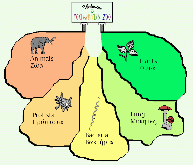 |
Visit the (virtual) Foundalis Zoo! | A virtual tour in the magical world of living beings. Enjoy the pictures that I took in various places in the world. |
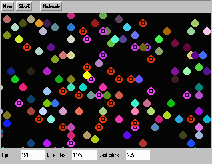 |
Origins of Life | Would you think that the appearance
of life on Earth is a miracle? Then we disagree.
If you
would like to know why, visit this site. Here you’ll
find a little program that will allow you to “play god”
and create your own life
, while at the same time find
answers to certain questions you might not expect they
can be answered, such as: “Why do we age and die?”. |
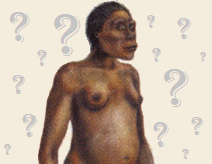 |
Who was the First Human? | If our parents, grandparents, grand-grand-parents, and so on, are all humans, and if there was a time in the past before which there were no human beings on Earth (clearly), then isn’t it obvious that there should be a First Human, our primordial ancestor, who appeared at some point in time? |
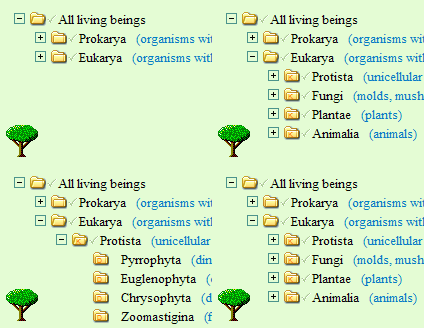 |
Taxonomy Explorer | Anyone familiar with Windows Explorer? Yes? Then consider using the Taxonomy Explorer, an intuitive tool that allows you to navigate in the tree of biological classification of species, as easily as you do when you navigate in the tree of your computer’s folders and files. |
 |
The Role of Chance in Evolution | Some people think as follows: “Complex organisms cannot have appeared out of mere chance!” Of course not. Evolution does not work with mere chance. Read this article to see what it is that works against chance in nature, and how evolution really works. |
 |
Evolution and Gaps
in the Fossil Record |
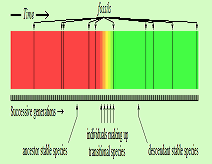
One frequent argument against evolution is that the fossil record is full of gaps, so it doesn’t show species changing gradually to other species. However, gaps are precisely what we should expect to observe according to the modern understanding of evolution. Read, to see why. |
 |
How Creationists Distort Evolution: a Study in Religious Dishonesty | Creationists, in their feverish
attempts to discredit the theory of evolution, repeat
again, and again, arguments that assume a wrong
theory of evolution. They misrepresent it, attacking a
caricature of evolution. Why do they do that? Are they
simply ignorant, or are they dishonest? This is a link to a sub-index with articles that expose some of the distortions that creationists make to evolutionary theory. The articles then go on to explain what the theory really says. |
 |
Why Is the Quantum World so Strange? | This article argues that what some physicists consider as inexplicable “strangeness” of the laws of quantum physics is a question that cannot be answered strictly within the domain of physics, but can be easily understood after taking into account knowledge from biology and cognitive science. |
Θέματα Βιολογίας, από τον Χάρη Φουνταλή |
  |
| Αυτό που ακολουθεί είναι μια
λίστα θεμάτων βιολογίας που
βρίσκονται μεταξύ των
ενδιαφερόντων του συγγραφέα.
Σκοπός-τους είναι κυρίως να
ψυχαγωγήσουν, και κατά δεύτερο
λόγο να μορφώσουν και να
υπογραμμίσουν τη σημασία αυτής
της επιστήμης στην ορθή
κατανόηση του κόσμου που μας
περιβάλλει. Καλή διασκέδαση!
|
|
Επισκεφθήτε τον (εικονικό) Ζωολογικό Κήπο Φουνταλή! | Μια εικονική παρουσίαση του μαγικού κόσμου των έμβιων όντων, μέσω φωτογραφιών που τράβηξα σε διάφορα μέρη του κόσμου. (Κείμενα κάτω από κάθε είδος προς το παρόν μόνο στα αγγλικά.) |
|
Προέλευση
της ζωής (Μόνο στα αγγλικά) |
Πιστεύετε μήπως
οτι η εμφάνιση της ζωής στη Γη
είναι ένα θαύμα; Τότε
διαφωνούμε.
Αν θέλετε να
μάθετε γιατί, επισκεφθείτε
αυτή τη σελίδα. Εδώ θα βρείτε
ένα προγραμματάκι που θα σας
επιτρέψει να “το παίξετε θεός”
και να δημιουργήσετε τη
δική-σας ζωή, ενώ ταυτόχρονα θα
βρείτε απαντήσεις σε ορισμένα
ερωτήματα που μπορεί να μην
υποπτεύεστε οτι έχουν
απάντηση, όπως στο εξής: «Γιατί
γερνάμε και τελικά πεθαίνουμε;». |
|
Ποιος ήταν ο Πρώτος Άνθρωπος; | Αν οι γονείς-μας, παππούδες-μας, προ-προπάπποι-μας, κ.ο.κ., είναι όλοι-τους άνθρωποι, κι αν υπήρξε κάποιος χρόνος στο παρελθόν κατά τον οποίο δεν υπήρχαν άνθρωποι στη Γη (ασφαλώς έτσι είναι), τότε δεν είναι προφανές οτι θα έπρεπε να έχει υπάρξει ένας Πρώτος Άνθρωπος, ο πρωταρχικός-μας πρόγονος, που να εμφανίστηκε κάποτε στον πλανήτη; |
|
Εξερευνητής
Ταξινόμησης (Μόνο στα αγγλικά) |
Μήπως είστε εξοικειωμένοι με τον Εξερευνητή των Windows; Ναι; Τότε ρίξτε μια ματιά στον Εξερευνητή Ταξινόμησης, ένα διαισθητικά εύχρηστο εργαλείο που σας επιτρέπει την πλοήγηση στο δέντρο της βιολογικής ταξινόμησης των ειδών, με τόση ευκολία όση όταν επιχειρείτε πλοήγηση στο δέντρο των φακέλλων και αρχείων του υπολογιστή-σας. |
|
|
Ο ρόλος της τύχης στην εξέλιξη (Μόνο στα αγγλικά) |
Μερικοί σκέφτονται ως εξής: “Οι πολύπλοκοι οργανισμοί δεν μπορεί να εμφανίστηκαν απλά κατά τύχη!” Φυσικά όχι. Η εξέλιξη δεν λειτουργεί με την απλή τύχη. Διαβάστε αυτό το άρθρο για να δείτε τί είναι αυτό που πάει ενάντια στην τύχη στο φυσικό κόσμο, και πώς πραγματικά λειτουργεί η εξέλιξη. |
|
Πώς οι Δημιουργιστές παραποιούν την εξέλιξη: μια μελέτη της θρησκευτικής ανεντιμότητας | Οι Δημιουργιστές,
στις πυρετώδεις προσπάθειές
τους να καταρρίψουν τη θεωρία
της εξέλιξης, επαναλαμβάνουν
ξανά και ξανά επιχειρήματα που
προϋποθέτουν μια λανθασμένη
θεωρία εξέλιξης. Την
παραποιούν, επιτιθέμενοι σε
μια καρικατούρα-της. Γιατί το
κάνουν; Είναι απλώς αδαείς, ή
μήπως ανέντιμοι; Σύνδεσμος σε υπο-ευρετήριο θεμάτων που αναδεικνύουν τις παραποιήσεις που κάνουν οι δημιουργιστές στην εξελικτική θεωρία. Τα κείμενα στη συνέχεια εξηγούν τί πραγματικά λέει η θεωρία. |
|
Γιατί
ο κόσμος των κβάντων είναι τόσο
παράξενος; (Μόνο στα αγγλικά) |
Αυτό το άρθρο ισχυρίζεται οτι αυτό που μερικοί φυσικοί βλέπουν σαν ανεξήγητη “παραξενιά” των νόμων της κβαντικής φυσικής είναι ένα θέμα που δεν μπορεί να κατανοηθεί αυστηρά εντός των ορίων της φυσικής, αλλά μπορεί να γίνει εύκολα κατανοητό αν πάρουμε υπόψη γνώσεις από τη βιολογία και τη νοολογία. |